Universal
Hexagram
As above, so below
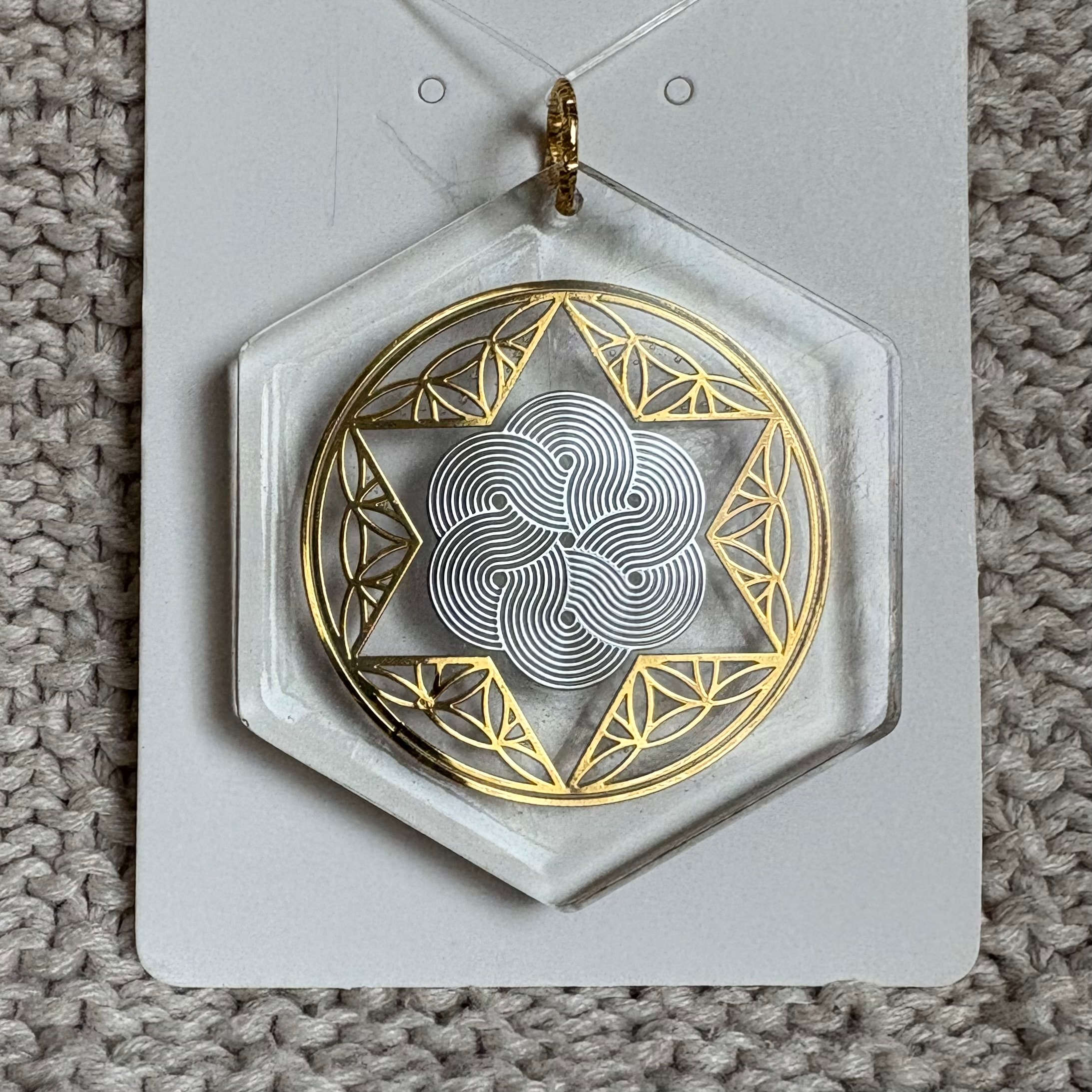
The Hexagram, the six-pointed star formed by two overlapping equilateral triangles, is one of the most universally significant geometric symbols. Known as the Star of David in Judaism, the Seal of Solomon in Islam, and the Shatkona in Hinduism, it appears across the world's great spiritual traditions.
Shop Hexagram PendantsWhat it Means
The two interlocking triangles of the Hexagram represent the union of opposites: the upward triangle symbolises fire, the masculine, and the divine descending into matter; the downward triangle symbolises water, the feminine, and matter ascending toward the divine. Together they express the Hermetic axiom 'As above, so below', the principle that the macrocosm and microcosm mirror each other perfectly. The six points represent the six directions of space.
History & Origins
The Hexagram appears in Hindu temples as the Shatkona (union of Shiva and Shakti), in Jewish tradition as the Star of David (Magen David), in Islamic art as the Seal of Solomon, and in Western esotericism as a symbol of the philosopher's stone. It appears in ancient Mesopotamian art, in medieval European alchemy, and in the sacred geometry of virtually every major civilisation. It became the official symbol of Judaism in the 19th century.
Wearing the Hexagram
Wearing the Hexagram is an affirmation of the great principle of correspondence, that you are a microcosm of the universe, and that heaven and earth meet within you.