Universal
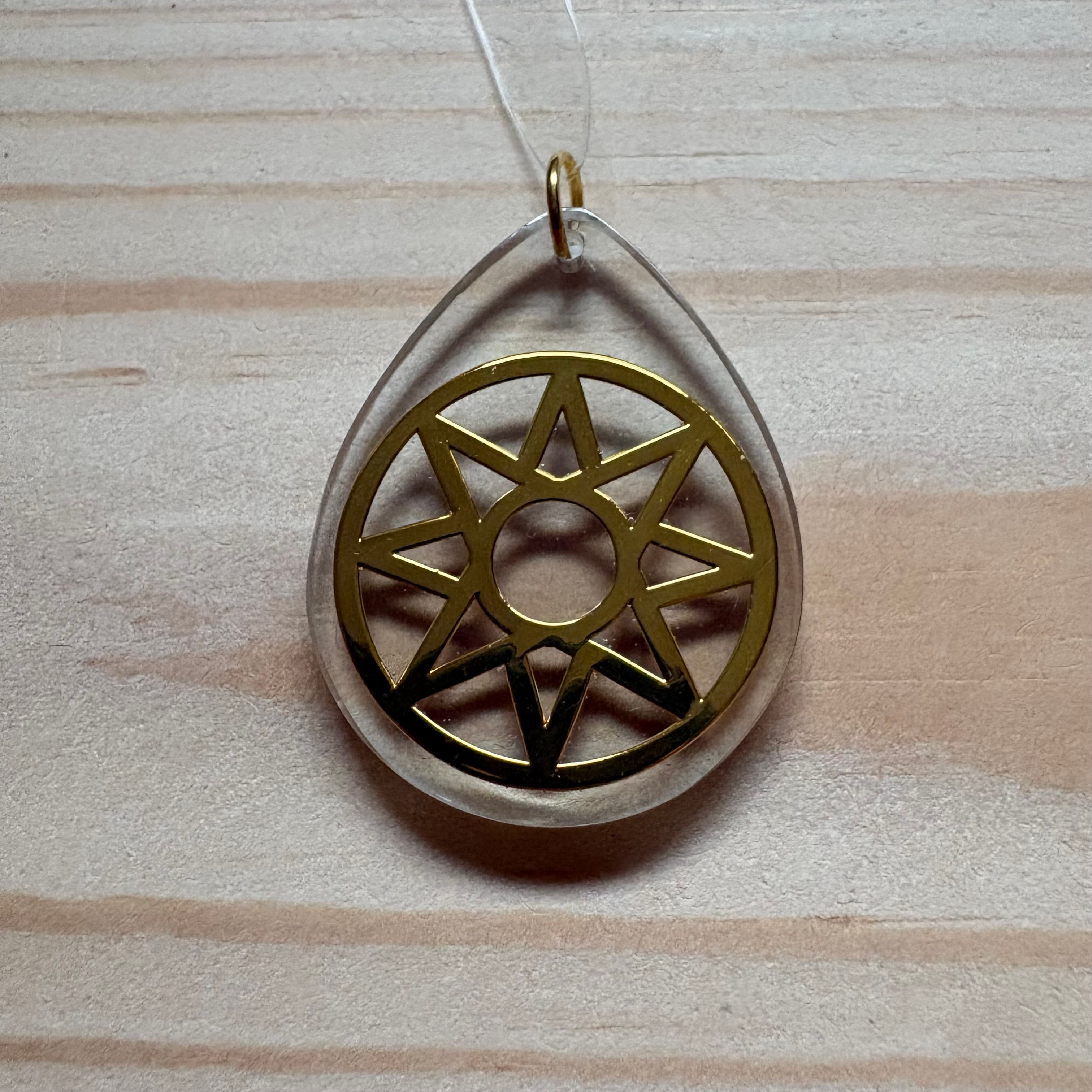
Eight-Sided Star
Regeneration, abundance, and cosmic order
The eight-pointed star, formed by two overlapping squares, is one of the most widely used geometric symbols across cultures. Known as the Star of Ishtar, the Rub el Hizb, and the Octagram, it appears in Islamic art, Christian iconography, and ancient Mesopotamian symbolism.
Shop Eight-Sided Star PendantsWhat it Means
The number eight is universally associated with regeneration, abundance, and new beginnings, it is the number that follows the completion of seven. The eight-pointed star represents the eight directions of space, the eight-fold path of Buddhism, and the regenerative cycles of nature. In Islamic tradition it is a symbol of divine order and appears throughout sacred architecture. In Mesopotamia it was the symbol of Ishtar, goddess of love and war.
History & Origins
The eight-pointed star appears in ancient Mesopotamian art as the symbol of the goddess Ishtar (c. 3000 BCE). It is found throughout Islamic geometric art, Byzantine mosaics, and medieval Christian symbolism. The Rub el Hizb, two overlapping squares, is used in Islamic calligraphy to mark the end of a chapter. The octagram appears in the flags of several nations and remains one of the most widely recognised geometric symbols in the world.
Wearing the Eight-Sided Star
Wearing the 8-Sided Star is an alignment with the regenerative power of the universe, a reminder that after every completion comes a new beginning, and that abundance flows in all eight directions.