Indigenous North American
Dream Catcher
Filtering darkness, letting in light
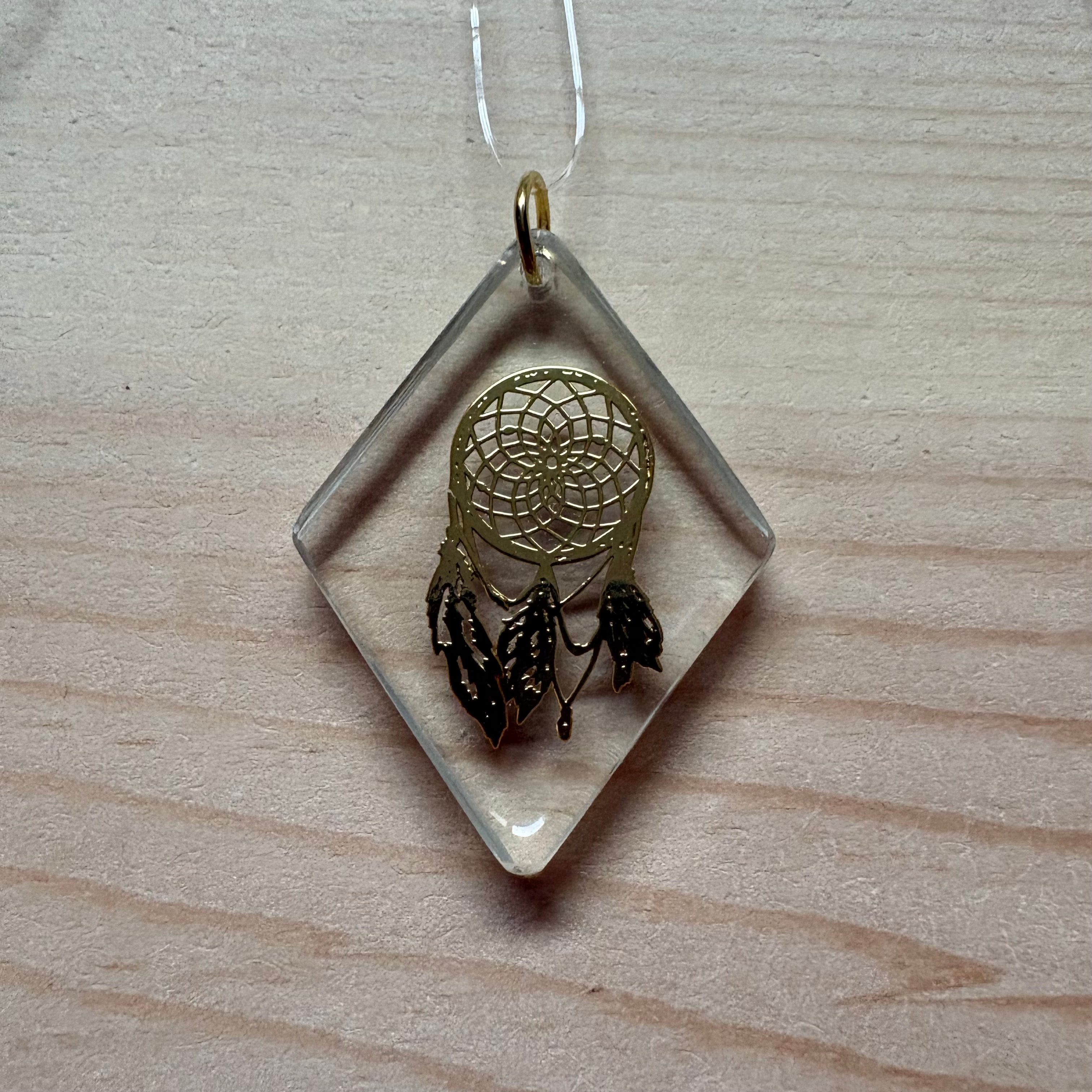
The dream catcher is a handmade willow hoop woven with a web of sinew or thread, decorated with feathers and beads. Originating with the Ojibwe (Anishinaabe) people of the Great Lakes region, it is one of the most recognised symbols of Indigenous North American culture.
Shop Dream Catcher PendantsWhat it Means
According to Ojibwe tradition, the dream catcher is hung above the sleeping place to filter dreams. Good dreams pass through the web's central hole and slide down the feathers to the sleeper; bad dreams are caught in the web and dissolve with the morning light. The circular form represents the circle of life; the web represents the interconnectedness of all things; the feathers represent the breath of life.
History & Origins
The dream catcher originates with the Ojibwe people, who called it 'asabikeshiinh' (spider) or 'bawaajige nagwaagan' (dream snare). According to legend, the Spider Woman (Asibikaashi) wove protective webs for children, and as the Ojibwe spread across the continent, the dream catcher was created as a portable version of her protection. The symbol spread to other Indigenous nations and became widely known outside Indigenous communities in the 1960s–70s.
Wearing the Dream Catcher
Wearing a Dream Catcher is an invitation for protection during your most vulnerable hours, a reminder that you are held, that darkness can be filtered, and that the light of good dreams is always finding its way to you.